
Claim Your Free Estimate Today
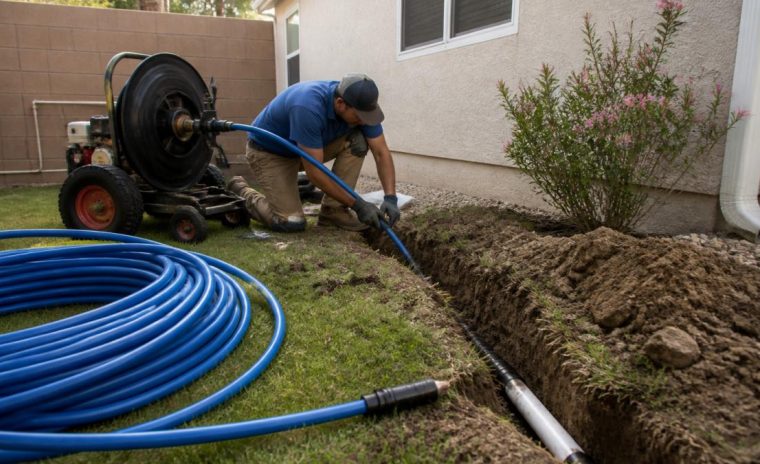
Table of Contents
- Why Trenchless Sewer Repair Fits Small Yards
- Trenchless Pipe Lining and Cured-in-Place Pipe (CIPP)
- Pipe Bursting Sewer Repair for Full Replacement
- Sewer Camera Inspection: The Step That Decides Everything
- Trenchless Sewer Repair Cost and What Drives It
- Your Step-by-Step Process From First Call to Final Inspection
- When Trenchless Repair Is Not the Right Answer
- Frequently Asked Questions
Last Updated: October 9, 2026
Why Trenchless Sewer Repair Fits Small Yards
Trenchless sewer repair fixes or replaces a damaged sewer line with minimal digging, using the existing pipe path instead of cutting a channel through your property. Acclaimed Drain And Plumbing Solutions, LLC runs sewer camera inspections and trenchless repairs across Tucson and Southern Arizona, and yard access comes up on nearly every older-home call.
A traditional open-trench repair needs a continuous excavation wide enough for a crew and a machine. On a quarter-acre lot with a block wall six feet from the house, that corridor often doesn’t exist. Trenchless methods shrink the digging to a couple of access pits, making them the default recommendation for tight properties.
How Much Digging Trenchless Methods Actually Require
Most trenchless jobs need two access points: one near the house, one near the property line or city connection. Each pit is dug by hand or with a compact machine, and crews restore the surface afterward.
That’s the whole footprint: no trench across the lawn, no torn-up garden beds, no demolished driveway. Open-trench work can require removing hardscape, fencing, and mature landscaping along the entire run.
Pro Tip
Before any digging starts, confirm where your private line ends and the city’s responsibility begins. On many properties that boundary sits at the cleanout or the property line, and knowing it upfront prevents paying twice for the same problem.
Before any digging starts, confirm where your private line ends and the city’s responsibility begins. On many properties that boundary sits at the cleanout or the property line, and knowing it upfront prevents paying twice for the same problem.
Trenchless Pipe Lining and Cured-in-Place Pipe (CIPP)
Pipe lining, often called cured-in-place pipe or CIPP, installs a new pipe inside the old one without removing it. A flexible resin-soaked liner is pulled through the existing sewer pipe, inflated against the walls, and cured until it hardens into a smooth, jointless tube.
This is the least invasive trenchless option, and for small yards it’s usually the first method we evaluate. The old pipe stays put; the new liner becomes the structural pipe.
What a Resin Liner Does to an Old Sewer Line
The liner seals cracks, spans small gaps, and covers the joints where root intrusion starts. Because the finished surface is smooth, flow capacity often improves even though the diameter shrinks slightly.
The result is restored structural integrity and fewer places for roots and debris to catch. Durability depends on resin and installation quality, but a properly installed liner serves for decades.
Pipe Bursting Sewer Repair for Full Replacement
Pipe bursting is the trenchless method for full replacement, not rehabilitation. A bursting head is pulled through the old pipe, fracturing it outward while pulling a new pipe into the same path.
Use it when the line is too far gone for a liner: collapsed sections, severe bellies, or a diameter that needs to increase. Because the old pipe shatters into the surrounding soil, the new pipe can often be sized larger, restoring or improving flow capacity.
How Small-Yard Dimensions Change the Decision
On a tight lot, the choice between lining and bursting is often decided by physical space rather than pipe condition alone. Three measurements matter most:
- Yard width and side-setback clearance. Lining needs only two small access pits, so it can work in a side yard barely wide enough for a person and a compact machine. Pipe bursting needs a larger launch pit plus a clear setup area for the pulling rig, which may not fit between a house and a block wall.
- Pipe depth. Deeper lines mean deeper pits. On a small yard, a deep pit can undermine a fence, patio, or foundation if it is too close to a structure. A contractor should assess soil and proximity before committing to bursting.
- Distance to structures and hardscape. Bursting fractures the old pipe outward into the surrounding soil. If the line runs directly under a slab, driveway, or mature tree, the vibration and soil displacement need to be evaluated. Lining avoids that displacement entirely.
A practical rule most practitioners use: if the pipe is still structurally sound enough to hold a liner, lining is the safer small-yard choice. If the pipe has lost its shape or needs upsizing, bursting is the realistic path, but only if the yard can accommodate the equipment.
What the Setup Actually Looks Like
A bursting job needs a launch pit at one end, a receiving pit at the other, and a clear area for the pulling equipment and hose.
The trade-off is disturbance. Pipe bursting needs larger access pits than lining, and the pulling equipment requires a clear setup area. On a very tight lot, that setup space is the limiting factor. A plumbing contractor should confirm feasibility before you commit.
| Method | Best For | Digging Required | Typical Use Case |
|---|---|---|---|
| Cured-in-place pipe (CIPP) lining | Cracked, root-invaded, or jointed pipe still structurally sound | Two small access pits | Small yards, driveways, mature landscaping |
| Pipe bursting | Collapsed or undersized pipe needing full replacement | Two larger pits plus equipment setup | Full replacement with possible upsizing |
| Open-trench replacement | Severely misaligned or deeply damaged lines | Continuous trench along the run | Large lots with clear access |
Watch Out
Pipe bursting is not a universal fix for a collapsed line. If the surrounding soil is unstable or the line runs under a structure that cannot tolerate soil displacement, open-trench replacement may be the only safe option. Get a camera inspection and a site assessment before approving the method.
Pipe bursting is not a universal fix for a collapsed line. If the surrounding soil is unstable or the line runs under a structure that cannot tolerate soil displacement, open-trench replacement may be the only safe option. Get a camera inspection and a site assessment before approving the method.
Sewer Camera Inspection: The Step That Decides Everything
A sewer camera inspection is a video examination of the inside of your sewer line using a camera on a flexible push rod.
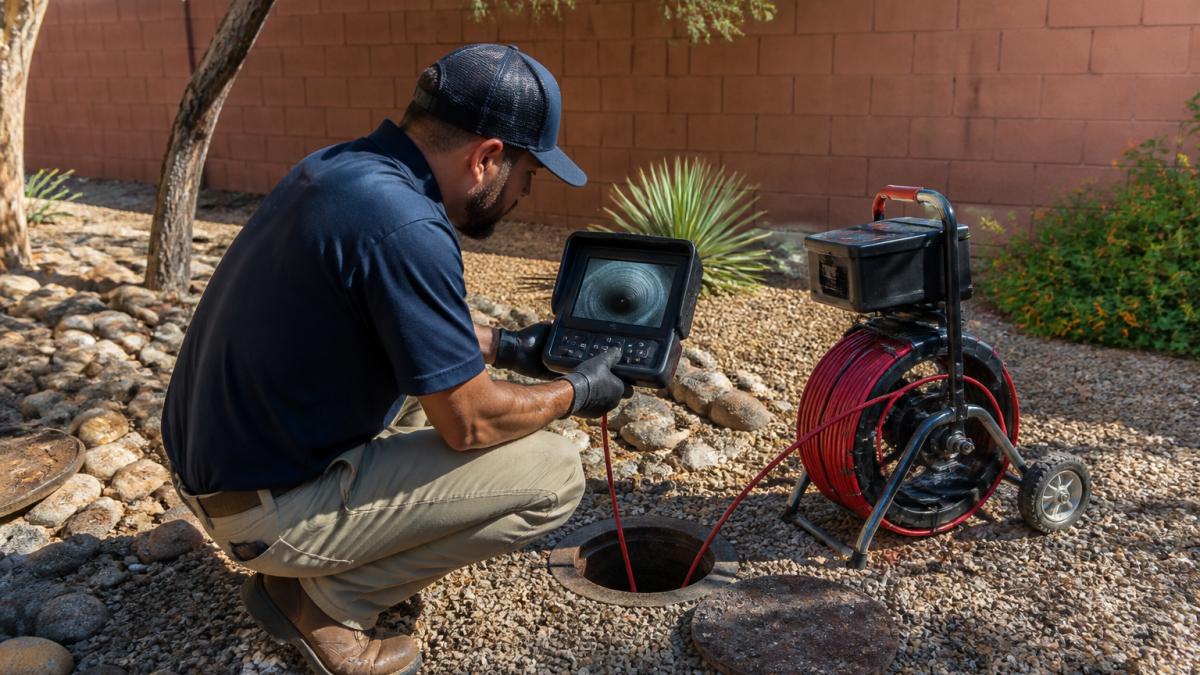
The camera reveals the exact location of the damage, whether it’s a crack or full collapse, whether roots entered through joints, and whether the pipe has lost its slope.
Claim Your Free Estimate Today →
Acclaimed Drain And Plumbing Solutions, LLC records the footage and walks customers through it. If a liner won’t work because the pipe is collapsed, customers will see why.
Watch Out
Never approve a sewer line replacement based on a drain-clearing visit alone. Without camera footage, you can’t tell a recurring blockage from a failing pipe, and you may pay for a replacement you didn’t need.
Never approve a sewer line replacement based on a drain-clearing visit alone. Without camera footage, you can’t tell a recurring blockage from a failing pipe, and you may pay for a replacement you didn’t need.
Trenchless Sewer Repair Cost and What Drives It
Trenchless sewer repair cost depends on the method, the length and depth of the run, the pipe material and diameter, and how accessible the line is. There is no single number, and any quote without a camera inspection is a guess.
Pricing depends on what the camera finds: a short liner section on an accessible line prices very differently from a full pipe bursting replacement under a driveway.
What Drives the Number on a Small Yard
On a tight lot, access rather than pipe length often becomes the dominant line item. Here is how the major drivers break down:
- Run length. Lining and bursting are priced per linear foot. A typical residential lateral runs from the house to the property line or city main, and that distance is the base of the estimate.
- Depth. A line four feet down is easier and faster to reach than one eight feet down. Deeper access pits mean more excavation, more shoring, and more labor hours.
- Access and setup. This is where small yards separate from large ones. If the cleanout is buried, if a finished patio or driveway sits over the line, or if the side yard is too narrow for a compact machine, crews may have to dig by hand or use smaller equipment, both of which raise labor cost.
Why Two Neighbors Get Different Quotes
Two houses on the same street can get substantially different quotes, and it’s rarely about the contractor.
Access is the second factor: a buried cleanout, a finished patio over the line, or a yard too tight for equipment all raise labor costs.
A common pattern is that the quote with the lowest headline number is the one that excludes restoration, permits, or post-repair camera verification.
U.S. Environmental Protection Agency guidance on private sewer lines notes that private lateral maintenance is the property owner’s responsibility, which is worth confirming before you assume the city will cover any part of the work.
Key Takeaway
Get a written, flat-rate quote tied to camera findings, not an hourly estimate. A quote you can compare line by line is the only way to know what you’re actually paying for.
Get a written, flat-rate quote tied to camera findings, not an hourly estimate. A quote you can compare line by line is the only way to know what you’re actually paying for.
Your Step-by-Step Process From First Call to Final Inspection
Here is the sequence to expect from any contractor handling trenchless sewer repair for small yards.
- Call and describe the symptom. Backups, slow drains, gurgling, or sewage odors all point in different directions. Give the dispatcher as much detail as you can.
- Camera inspection. A technician runs the sewer camera and records the line from the cleanout to the connection.
- Review the findings. You see the footage and hear the options in plain language, including which methods fit your yard.
- Utility locating and permits. Crews mark underground utilities and pull any required permits before digging.
- Access pits and repair. The crew digs the minimum access points and performs the lining or bursting work.
- Post-repair camera verification. A second camera pass confirms the new liner or pipe is seated correctly with no obstructions.
- Yard restoration. Access pits are backfilled and the surface restored.
Ask about the warranty in writing at step three, not after the work is done. A warranty covering the liner or pipe for a defined period, plus workmanship, is the difference between a repair and a temporary patch.
When Trenchless Repair Is Not the Right Answer
Trenchless methods are not universal, and a contractor who says otherwise is selling, not diagnosing. Several conditions rule them out.
- Fully collapsed or crushed pipe. A liner needs a pipe-shaped host to bond against. If the line has lost its shape, pipe bursting or open-trench replacement is the realistic path.
- Severe misalignment or a deep belly. Liners follow the existing path, so a pipe that has shifted or sagged badly won’t produce a usable result.
- No viable access point. If there’s no cleanout and no room to create one, even trenchless work becomes impractical.
- Roots that have deformed the pipe. Root intrusion through joints is fine for lining. Roots that have physically crushed the pipe are not.
When a line fails these checks, the honest recommendation is replacement, and you should hear that clearly rather than being sold a liner that won’t hold. A second opinion with camera footage is always reasonable if a quote feels off.
A failing sewer line in a small yard feels like a choice between a wrecked property and an unaffordable bill. Acclaimed Drain And Plumbing Solutions, LLC handles the full process, from sewer camera inspections and hydro jetting to trenchless sewer liner technology and structural pipe rehabilitation, with upfront flat-rate pricing and financing options for eligible projects.
Frequently Asked Questions
Can trenchless sewer repair be done in a small yard?
Yes, in most cases. Trenchless methods need only two small access holes, usually at the cleanout near the house and at the property line or city connection. A sewer camera inspection confirms whether the line can be lined or burst from those points. Tight side yards, patios, and driveway-adjacent lines are common candidates. The deciding factor is pipe condition and access to the endpoints, not the size of the yard.
How much digging is needed for trenchless sewer repair?
Expect two access holes, typically about 2 to 4 feet square each, rather than a continuous open trench along the full pipe run. One hole goes near the foundation cleanout, the other at the connection point. A traditional dig for the same line can remove 20 to 40 feet of lawn, driveway, or garden bed. Trenchless work leaves the middle of the run undisturbed, which matters most when the pipe sits under concrete or mature landscaping.
What does trenchless sewer repair cost, and what drives the price?
Trenchless sewer repair cost depends on pipe length, diameter, depth, the method chosen, and site access. Pipe lining usually costs less than full pipe bursting because it uses less material and labor. Add-ons like root removal, spot repairs, permit fees, and yard restoration also affect the total. Because every property is different, request a written estimate after a camera inspection rather than relying on a phone quote.
How do plumbers decide between pipe lining and pipe bursting?
The camera inspection drives the decision. Pipe lining works when the existing pipe is structurally sound enough to hold a resin liner, even with cracks, root intrusion, or corrosion. Pipe bursting is the choice when the pipe has collapsed, is badly offset, or needs a larger diameter for flow capacity. Lining preserves the current pipe size; bursting pulls a new pipe through and can upsize it. A qualified contractor should explain both options with camera footage.
